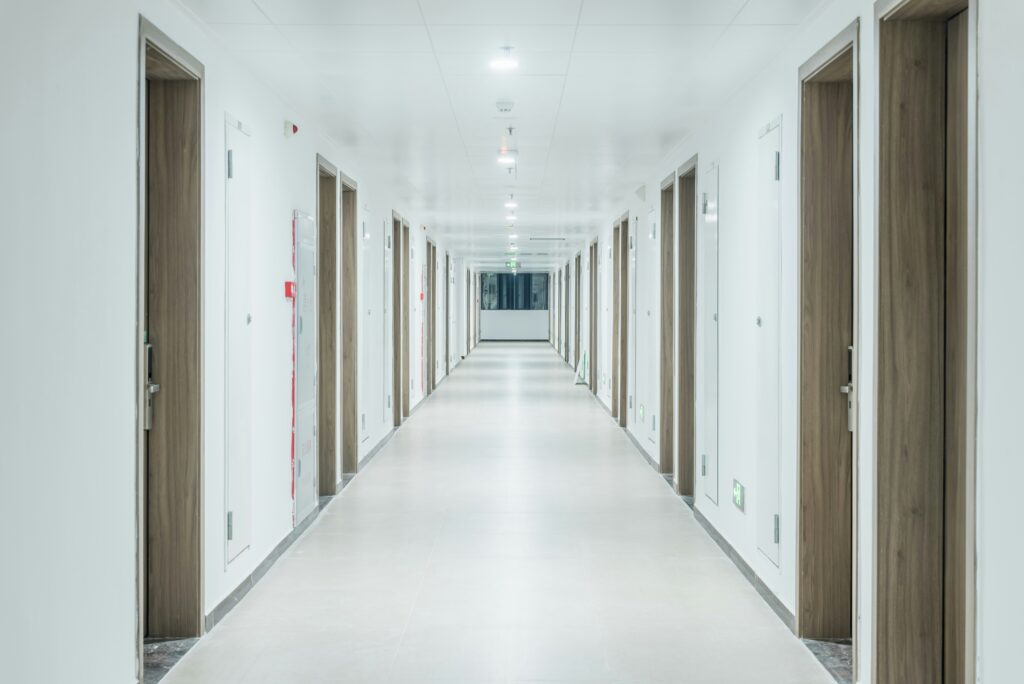
Why are liminal spaces so unsettling? At first, they don’t always look like traditional horror settings. There may be no monster, no blood, no ghost, and no obvious threat. Instead, you see an empty school hallway, a quiet mall after closing, a hotel corridor with buzzing lights, or a swimming pool with no one in it.
The place is familiar, but something feels wrong. That strange mix of recognition and unease is exactly why liminal spaces have become such a powerful part of modern horror, especially with the massive popularity of Backrooms and internet-born horror aesthetics.
What Are Liminal Spaces?
A liminal space is a place of transition. The word “liminal” comes from the Latin word “limen,” which means “threshold.” This means it’s a space between one state and another. In everyday life, this might be a hallway, stairwell, airport, waiting room, empty office, hotel lobby, or parking garage. These places are not usually destinations. They are places you pass through on your way somewhere else.
In the context of internet lore and horror culture, however, liminal spaces have taken on a more specific meaning. They are often empty or abandoned places that feel eerie, surreal, nostalgic, or strangely lonely. Common examples include deserted schools, dead malls, empty playgrounds, carpeted office corridors, vacant pools, and endless suburban streets. The unsettling feeling often comes from seeing a familiar place stripped of its normal context, especially when there are no people around.
That absence matters. A school hallway should have students. A mall should have shoppers. A hotel hallway should have footsteps, voices, luggage wheels, and doors opening. When those spaces are empty, your brain notices the mismatch.
Why Are Liminal Spaces So Unsettling?
One reason liminal spaces feel disturbing is that they sit in an emotional in-between. They are familiar enough to recognize, but empty enough to feel abandoned. That puts the viewer in a strange mental state: comfort and discomfort at the same time. Especially when paired with an external threat, existential dread, or a supernatural element, liminal spaces take on a whole new meaning for several reasons:
They Feel Familiar, But Not Quite Right
A liminal space often looks ordinary at first. You know what a hallway is. You know what a waiting room is. You know what a hotel corridor is supposed to feel like. But when the lighting is wrong, the space is empty, or the perspective feels slightly off, the ordinary becomes strange.
This connects to the uncanny. Research around liminal space aesthetics has linked the eerie feeling to an “uncanny valley” effect for places, where a physical environment feels almost normal but subtly wrong. It’s akin to a being or creature that is almost human, but isn’t quite. Something about their face is slightly off, or their expression is alien.
That “almost” is the scary part.
Liminal Spaces Remove Human Context
A grocery store at noon feels normal. A grocery store at 3 a.m. with every aisle empty and the lights flickering feels like something has gone wrong. Liminal spaces disturb us because they remove the people and activity that usually explain a place’s purpose.
Without people, activity, sound the space feels suspended. It is waiting for something. Or worse, it feels like something already happened and you arrived too late.
Liminal Spaces Trigger Nostalgia and Dread at Once
Many unsettling liminal spaces look like places from childhood: school gyms, indoor pools, arcades, daycare rooms, carpeted basements, old fast food play areas. These places are generic enough that you might feel like you’ve been there before, even if you haven’t actually been to that particular place. These images can feel nostalgic, but not warmly nostalgic. They feel like memories that have been abandoned.
That emotional mix is powerful. It is not just fear. It’s sadness, loneliness, confusion, and a sense that time has slipped out of order.
Liminal Spaces in Psychology
When people talk about liminal spaces in psychology, they often mean more than physical locations. A liminal state can also describe a period of transition, such as adolescence, grief, moving homes, ending a relationship, changing careers, or waiting for life to become clear again.
That is part of why liminal horror works so well. The empty hallway or endless office is not just creepy architecture. It becomes a visual metaphor for uncertainty; a mental space for the unknown.
You are between places.
You are between identities.
You are not where you started, but you have not arrived anywhere new.
That feeling can be deeply uncomfortable because humans like patterns, meaning, and social context. Liminal spaces remove those anchors. They ask: What happens when the world looks familiar, but no longer behaves like home?
How Liminal Spaces Became Internet Famous
Liminal spaces existed as a feeling long before the internet named them. Empty corridors, deserted streets, and strange transitional rooms have appeared in art, photography, literature, and film for years. But the internet turned the feeling into a recognizable aesthetic.
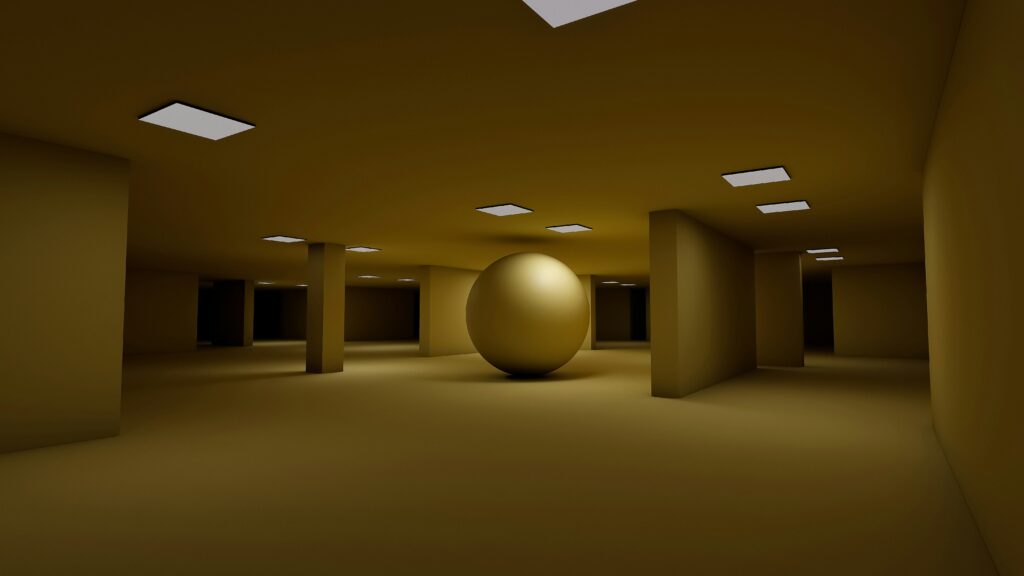
The liminal space aesthetic gained major online visibility around 2019, after a 4chan post featuring an eerie yellow-carpeted office-like space became associated with The Backrooms. The image and accompanying creepypasta described a place someone could enter by “noclipping” out of reality, becoming trapped in endless empty rooms with buzzing fluorescent lights.
From there, liminal spaces spread across Reddit, TikTok, YouTube, Twitter, and creepypasta communities. The aesthetic expanded beyond one image into a whole category of internet horror: dead malls, empty schools, old office buildings, indoor pools, and nostalgic places that feel abandoned by time.
The idea also shows up in liminal space “games” where you go somewhere else mentally. These “games” anecdotally tend to come with supernatural experiences, with many individuals reporting a nefarious presence in the “space” with them. A popular one is “red door yellow door” where you escape into a hallway of your mind and explore different rooms. It sounds harmless in theory, but many consider the game itself haunted.
Backrooms and the Rise of Liminal Horror
The Backrooms concept became one of the clearest examples of liminal horror because it turned the feeling of an empty transitional space into a full nightmare world. Instead of a haunted house, the monster is architecture itself: repetitive, confusing, artificial, and endless.
Kane Parsons helped popularize the concept further through immersive found-footage-style YouTube shorts, which later developed into an A24 feature film. Recent reporting described Backrooms as a major box office success, with Parsons moving from viral YouTube shorts to a full theatrical film.
Backrooms proves something important: modern horror audiences are hungry for atmosphere, mystery, and psychological unease. They do not always need a visible monster. Sometimes an endless beige hallway is enough. The success of Backrooms may just spur a brand new subgenre of horror. Time will tell!
Exploring Liminal Spaces in Storytelling
When it comes to storytelling, exploring liminal spaces gives writers and filmmakers a way to create dread without traditional horror imagery. These places work because they suggest that the world has shifted slightly out of place.
Liminal Spaces Create Instant Atmosphere
A liminal setting does a lot of work quickly. An empty mall at night immediately suggests abandonment, memory, consumer culture, and isolation. A closed school during summer break suggests childhood, silence, and the absence of routine. A hotel hallway suggests anonymity, transition, and the possibility of being watched.
The setting itself becomes the threat, and it doesn’t take much to be scary.
They Let the Audience Project Fear
Liminal spaces are often frightening because they are vague. You don’t know what’s wrong, so your brain starts inventing possibilities. Is someone hiding? Did everyone vanish? Are you trapped? Is this a memory? Is this a place outside reality?
That open-ended fear is incredibly effective in horror. It invites the audience to participate.
They Make Reality Feel Unstable
A good liminal space can feel like a dream, but not a pleasant one. It has dream logic. The hallway keeps going. The room repeats. The exit leads back inside. The lights hum, but there is no source of life.
This is why liminal horror pairs so well with found footage, analog horror, surreal horror, and psychological horror.
Why Are Liminal Spaces So Unsettling in Movies?
Movies are especially good at using liminal spaces because film can control light, sound, framing, and movement. A filmmaker can make a simple hallway feel endless by holding the shot too long. They can make a room feel wrong through symmetry, silence, or a low mechanical hum.
Sound Is a Huge Part of the Fear
Liminal horror often uses sound instead of action. Buzzing lights, distant ventilation, footsteps that may or may not be real, dripping water, muffled announcements, and low-frequency drones all create unease.
The Backrooms soundtrack has been discussed as part of the film’s atmosphere, using ambient noise and unsettling detail to deepen the sense of dread.
The Camera Makes the Space Feel Bigger
Wide shots can make a character look tiny. Long hallways can suggest endlessness. Static shots can make the audience scan the frame, waiting for something to change.
This is like the opposite of jump-scare horror. Liminal horror often scares you by making you wait.
Effective Examples of Liminal Spaces in Horror and Film
Backrooms
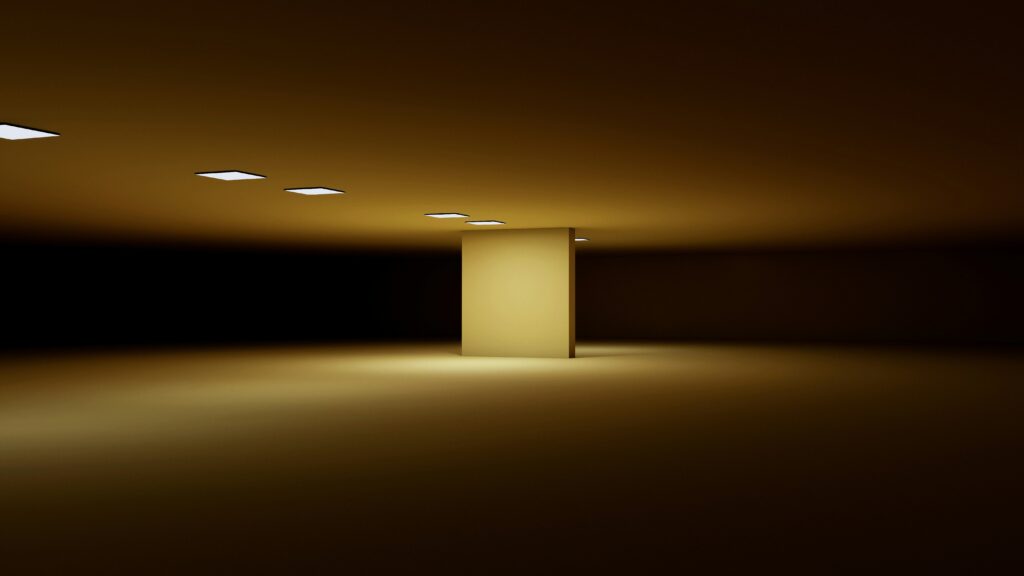
This is the obvious modern example. Backrooms takes the visual language of empty office corridors, fluorescent lighting, and repetitive architecture, then turns it into a nightmare of endless transition. Its success shows how strongly this aesthetic connects with modern horror fans.
Vivarium
Vivarium is a strong liminal horror-adjacent example because it turns a perfect suburban development into a surreal trap. The streets, houses, and lawns are familiar, but the repetition makes them feel artificial and hostile. Critics have recommended it as a good follow-up for viewers interested in Backrooms-style unease.
The Shining
The Overlook Hotel featured in The Shining is not always discussed as “liminal horror,” but it uses liminal space beautifully. Long corridors, empty ballrooms, isolated rooms, and patterned carpets create a sense of being trapped inside a place that is both luxurious and deeply wrong. The hotel feels like a transition point between reality, memory, madness, and haunting.
Skinamarink
Skinamarink uses domestic spaces in a liminal way. Walls, ceilings, doorways, carpets, toys, and dark corners become strange because they are detached from normal context. The house feels familiar, but the familiar has been emptied out and rearranged.
The Twilight Zone
Many episodes of The Twilight Zone use liminal spaces and liminal situations: empty towns, strange roads, unfamiliar versions of familiar places, and characters trapped between realities. It is a great older example of how “in-between” spaces can create unease without relying on gore.
A Room for the Guilty
In my own collection, Uncovered: The Story of Eva Courtland and Other Spooky Tales I make use of liminal spaces and dreamlike states to create atmosphere and build the story. Perhaps the best example is in the short story “A Room for the Guilty” where protagonist Nathaniel finds himself in a dark, empty hotel hallway that seems to get longer and darker each time he enters.
The clock is ticking on his time in this place and he must figure out why he’s there before it’s too late. It’s one of many short, spooky stories meant to keep you up at night!
How Writers Can Use Unsettling Liminal Spaces
If you write horror, unsettling liminal spaces are incredibly useful because they give you atmosphere before anything happens.
You can use them to:
- Create isolation
- Build psychological unease
- Suggest a break in reality
- Mirror a character’s emotional transition
- Create dreamlike pacing
- Make ordinary settings feel uncanny
For example, a character grieving a parent might keep dreaming of the same empty hospital corridor. A teenager starting at a new school might find a hallway that only appears after hours. A traveler might enter a hotel floor that does not exist on the elevator panel.
The key is to make the space emotional, not just weird. The place should reflect the character’s fear, loss, confusion, or desire to escape.
Conclusion
So, why are liminal spaces so unsettling? Because they take places we recognize and remove the meaning from them. They are familiar without being safe, empty without being peaceful, and nostalgic without being comforting. From Backrooms to empty hotels, abandoned malls, strange suburbs, and silent school hallways, liminal spaces tap into a deep human fear of being stuck between worlds. That is why they work so well in horror, and why audiences keep returning to them.
FAQ: Why Are Liminal Spaces So Unsettling?
Click a question to expand the answer.
What are liminal spaces?
Liminal spaces are transitional places, such as hallways, waiting rooms, airports, hotel corridors, stairwells, schools after hours, and empty malls. They are usually places we pass through rather than stay in. When they appear empty, quiet, or slightly wrong, they can feel eerie and unsettling.
Why are liminal spaces so unsettling?
Liminal spaces are unsettling because they feel familiar but incomplete. Your brain recognizes the place, but the missing people, strange lighting, silence, or emptiness creates a sense that something is wrong. That mix of recognition and unease makes the space feel uncanny.
Are liminal spaces always scary?
No. Liminal spaces are not always scary. Some can feel peaceful, nostalgic, or dreamlike. They become unsettling when familiar places are shown without their usual context, such as an empty school hallway, a deserted mall, or a hotel corridor with no visible end.
What is the psychology behind liminal spaces?
The psychology behind liminal spaces comes from transition, uncertainty, and disrupted expectations. Humans rely on context to feel safe. When a familiar place feels empty, abandoned, or out of order, the brain tries to explain the mismatch, which can create anxiety or dread.
Why are liminal spaces popular in horror?
Liminal spaces are popular in horror because they create atmosphere without needing obvious monsters or violence. An empty hallway, abandoned mall, or endless office can make viewers feel isolated, watched, or trapped. This makes them effective in psychological horror, found footage horror, analog horror, and surreal horror.
Is The Backrooms an example of liminal horror?
Yes. The Backrooms is one of the most famous examples of liminal horror. It uses endless office-like rooms, yellow walls, buzzing lights, and repetitive architecture to create a sense of being trapped in a familiar but impossible place.
What are some examples of liminal spaces in movies?
Examples of liminal spaces in movies include the empty corridors of The Shining, the artificial suburb in Vivarium, the strange domestic spaces in Skinamarink, and the endless office-like environments in Backrooms. These places feel unsettling because they are familiar spaces stripped of comfort and normal life.



2 Comments
monica altenor · June 21, 2026 at 2:25 am
Hello Steph,
Thank you for this fascinating article. I’ve experienced the feeling you described when walking through an empty shopping mall late in the evening or passing through a quiet school hallway during a holiday break. There was nothing dangerous about those places, yet they felt strangely unsettling. Your explanation of liminal spaces helped me understand why these environments can create such an eerie feeling.
I also found it interesting how social media and online communities have made liminal spaces more popular in recent years. Do you think people are drawn to liminal spaces because they evoke nostalgia, or is it more about the mystery and uncertainty they create?
Steph · July 2, 2026 at 5:27 pm
I think it’s a bit of both! They are alluring and nostalgic, but mysterious at the same time. And I think in the context of horror fans, the innate creepiness is super attractive!