What is a final girl? In horror, the final girl is usually the last surviving female character who makes it to the end of the story and faces the killer, monster, or threat. She is the one left standing when everyone else has fallen. She may escape, fight back, expose the truth, or confront the villain directly.
Over time, the final girl has become one of the most recognizable figures in horror movies, especially slashers, but the trope has grown far beyond its original form.
At first glance, the final girl might seem simple: she survives. But the reason this trope has lasted for decades is much deeper than that. The final girl carries the audience’s fear, hope, tension, and catharsis. She is not just the last person alive. She is the emotional center of the horror story.
What Does Final Girl Mean?
The phrase final girl refers to the female survivor who remains at the end of a horror story, most often in a slasher movie. She is usually the character who witnesses the horror most clearly, pieces together what is happening, and gets the final confrontation with the killer. The term is strongly associated with slasher films, but it has also been applied to monster movies, supernatural horror, survival horror, thrillers, and even some horror games.
The final girl is not simply “a woman who survives.” She usually plays a specific narrative role. She becomes the audience’s anchor. As the story grows more dangerous, viewers often shift their attention and emotional investment toward her. She notices what others miss. She grows more alert. She becomes the one person who understands the danger well enough to resist it.
That is why the final girl trope still matters. It gives horror a survivor figure, someone who can absorb the fear and push back against it.
The Final Girl Trope Explained
The final girl trope is most closely tied to slasher horror. In a typical slasher structure, a group of characters is stalked by a killer. One by one, the group is reduced until one young woman remains. She is often frightened, injured, isolated, and exhausted, but she keeps going. By the climax, she is no longer just running. She is fighting.
Early versions of the trope often gave the final girl certain traditional traits. She was frequently more cautious than her friends, more observant, and often framed as morally “purer” according to the rules of old-school slashers. Many final girls from 1970s and 1980s slashers avoided the behaviors that marked other characters for death, such as sex, drugs, or reckless partying.
That older pattern is one reason the trope has been debated so much. Was the final girl empowering because she survived? Or restrictive because she often had to be “good” in order to deserve survival? The answer depends on the movie, the era, and the way the character is written.
Modern horror has complicated the trope in interesting ways. Today, final girls can be angry, messy, sexual, traumatized, morally complicated, funny, self-aware, or even dangerous. Survival no longer belongs only to the quiet, innocent girl in the corner.
Who Coined the Term Final Girl?
The term final girl was coined by film scholar Carol J. Clover in her 1987 essay “Her Body, Himself: Gender in the Slasher Film.” She later expanded this analysis in her 1992 book Men, Women, and Chain Saws: Gender in the Modern Horror Film. Clover’s work became central to how critics, fans, and filmmakers talk about women in horror.
Clover argued that slasher films create a fascinating shift in audience identification. At first, viewers may be aligned with the killer’s point of view, especially through stalking shots or hidden perspectives. But as the film progresses, that identification often moves toward the final girl, who becomes the main figure of fear, endurance, and confrontation.
That idea helped change the way people discussed slasher movies. Instead of seeing them only as films about violence against women, Clover examined how audiences often end up identifying with the surviving woman. That does not make the trope automatically feminist or automatically regressive, but it does make it worth serious attention.
The History of Final Girls in Horror Movies
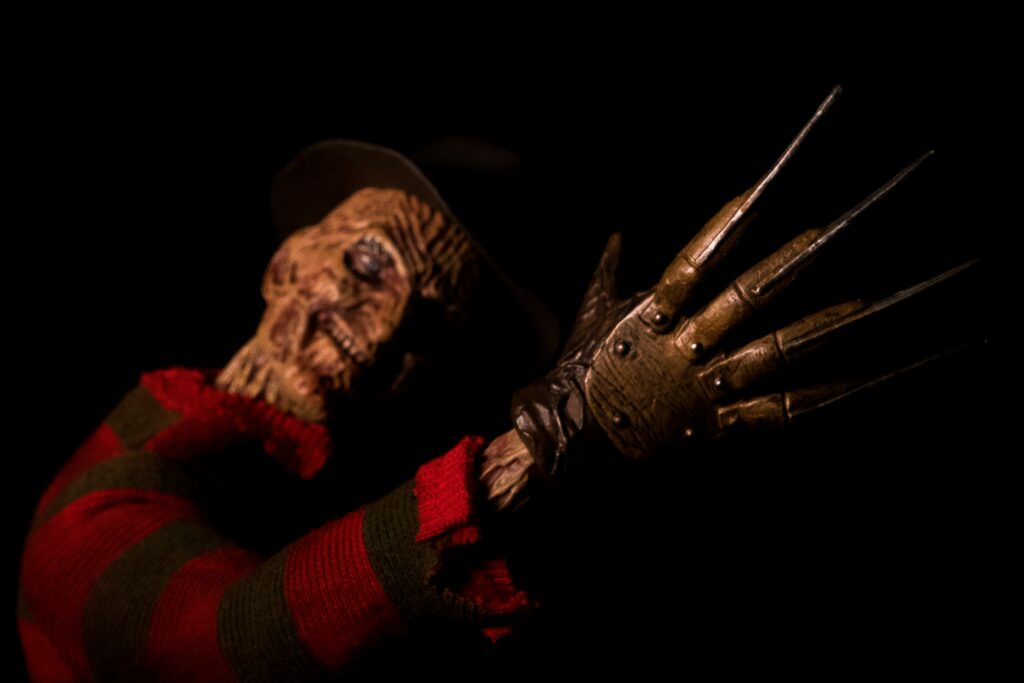
The final girl has roots in early horror and thriller storytelling, but the trope became most visible during the slasher boom of the 1970s and 1980s. Films like The Texas Chain Saw Massacre, Halloween, Friday the 13th, and A Nightmare on Elm Street helped define the structure audiences still recognize today.
Sally Hardesty from The Texas Chain Saw Massacre is often discussed as one of the earliest major final girls. Laurie Strode from Halloween became one of the most iconic. Nancy Thompson from A Nightmare on Elm Street brought intelligence, planning, and emotional courage to the role. These characters shaped the audience’s expectations for what a final girl could be.
By the 1990s, the trope became more self-aware. Sidney Prescott from Scream changed the game because she understood horror rules while also refusing to be flattened by them. She was not just surviving a killer. She was surviving trauma, media attention, betrayal, and the genre’s expectations.
From there, the final girl continued to evolve. Modern horror has expanded the trope beyond slashers, giving us survivors who are more complex, more openly flawed, and more active in shaping their own stories.
What Makes a Good Final Girl?
A good final girl is more than lucky. She needs to feel like someone who survives for a reason, even if the story includes chaos and chance. While every final girl is a little different, she often posses some or all of these driving traits:
She Pays Attention
A strong final girl notices details. She senses danger earlier than others. She may not understand everything right away, but she is usually more alert and sensitive than the people around her. This makes her feel active rather than passive.
She Has Emotional Stakes
The best final girls are not just trying to avoid death. They are trying to protect someone, uncover the truth, confront trauma, or reclaim control over their lives. Survival matters more when it connects to something personal.
She Changes Under Pressure
A final girl does not need to begin as a warrior. In fact, it is often more satisfying when she starts scared, uncertain, or underestimated. What matters is that the horror transforms her. By the end, she has become someone who can face what once seemed impossible.
She Is Resourceful
She uses what she has: intelligence, memory, environment, instinct, physical courage, emotional endurance. A good final girl does not need to be superhuman. She needs to adapt and use what she has available to her, both internal and external.
She Represents More Than Survival
The strongest final girls become symbols. They can represent resilience, trauma, rage, innocence lost, generational survival, or the refusal to stay a victim. Whatever her story is, whatever she has overcome, there will be someone in the audience who can relate, and that’s what gives her staying power in the minds of horror fans.
Famous Final Girls in Horror Movies
The world of horror has seen many iconic and infamous final girls. But what sets these ones apart from every other female survival? Let’s take a deeper look.
Please note: this section includes some survivor-based examples, so if you have not seen these films and want to go in completely blind, consider this your gentle spoiler warning.
Laurie Strode from Halloween
Laurie Strode is one of the most famous final girls in horror movies. She is cautious, observant, and believable. What makes Halloween effective is how ordinary she feels. Laurie is not a superhero.
She is a babysitter trying to survive a night that becomes impossible. This situation is so ordinary, so common, that it makes the horror that much more real. Her fear is authentic, which makes her endurance powerful.
Across later films, Laurie also becomes a figure of trauma and generational survival. She is a symbol to those around her; she becomes infamous in her world as well as ours. Her story shows how a final girl can evolve from a single-night survivor into a long-term horror icon.
Sally Hardesty from The Texas Chain Saw Massacre
Sally Hardesty from The Texas Chainsaw Massacre is pure survival panic. Her story is messy, frantic, and brutal, which is exactly why it works. She does not become polished or controlled. She endures.
Sally represents one of the rawest versions of the final girl: the person who survives because some primal part of her refuses to stop moving.
Nancy Thompson from A Nightmare on Elm Street
Nancy is one of the smartest final girl examples because she studies the threat. She does not only run from Freddy Krueger. She tries to understand him, prepare for him, and fight him on his own strange terms. This is a great example of the trope evolving from “simple, pure, pretty girl that survives” into the survivors being their own unique person with intelligence, wit, and emotional layers.
That makes Nancy a great example of the “investigator” final girl. Her strength comes from curiosity, intelligence, and courage.
Sidney Prescott from Scream
Sidney Prescott helped modernize the final girl trope. She is self-aware, emotionally layered, and refuses to be reduced to victimhood. Scream works so well because it comments on horror rules while still giving audiences a character worth caring about. In addition to helping move the final girl trope forward, it also popularized the idea of a movie being “meta” and essentially commenting on itself.
The characters in the movie actively compare their own situation to classic slasher horror and attempt to follow the “rules” in order to survive. They predict who may be next, what the killer’s motive may be, and who the killer is.
They take it a step further in that the killer’s motive is also tied to making a “real life” horror movie, which means the killer’s themselves must also follow certain rules and conventions. It’s a brilliant full-circle story.
As a final girl, Sidney’s effectiveness comes from her emotional realism. She is strong, but not untouched. She survives, but the story never pretends survival is easy. We see her break down many times, even go into hiding more than once. But she never fully gives in.
Ellen Ripley from Alien
Ellen Ripley is sometimes discussed as a final girl even though Alien is more science fiction horror than slasher. She fits because she becomes the last major survivor facing a terrifying, almost unstoppable threat. Clover and later critics have discussed Ripley in relation to the final girl framework, which shows how flexible the trope has become.
Ripley is effective because she is practical, focused, and believable under pressure. She also helped expand the idea of what a horror heroine could look like.
Grace from Ready or Not
Grace from Ready or Not is a modern final girl with bite. She is funny, furious, and increasingly unwilling to play by the rules of the nightmare around her. Her movie works because it blends horror, class satire, dark comedy, and survival into one sharp package.
Grace shows how modern final girls can be messy, angry, and deeply entertaining without losing emotional impact. It also shows how they can become a little dangerous themselves.
Final Girls in Horror Movies Beyond Slashers
Although the final girl is most associated with slashers, the idea now appears across many forms of horror.
In monster horror, the final girl may be the last one left to confront a creature. In supernatural horror, she may be the one who understands the haunting. In psychological horror, she may survive a breakdown of reality, manipulation, or trauma. In horror games, the trope can shift because the player’s choices may determine who survives.
This flexibility is part of why final girls remain so popular. The trope can adapt to different threats, different eras, and different types of fear.
A final girl does not have to be standing over a masked killer with a knife. Sometimes she is escaping a monster. Sometimes she is uncovering a family secret. Sometimes she is breaking a curse. Sometimes she is surviving herself.
Types of Final Girls
Not every final girl is built the same way. While every final girl shares certain core traits, the definition has evolved and expanded to fit all kinds of stories. As a result, we have a few classic types that many finals girls fall into, depending on their story and it’s context:
The Classic Final Girl
This is the traditional slasher survivor: observant, cautious, framed as morally different from her friends, and forced into direct confrontation with the killer.
Examples: Laurie Strode, Alice Hardy, Ginny Field.
The Investigator Final Girl
She survives because she asks questions. She investigates the situation and finds clues. She notices patterns, studies the threat, and refuses to ignore the truth.
Examples: Nancy Thompson, Sidney Prescott.
The Trauma Survivor
The story of a trauma survivor final girl is shaped by what happened before the horror begins. This can be something simple like the traumatic loss of a family member, already surviving something like an attack or an accident.
It can also be more layered and complex, like a complicated family or relationship breakdown, or learning their entire life was built around some kind of lie or fare. The plot becomes a test of whether she can reclaim power from this fear and brokenness.
Examples: Laurie Strode in later Halloween films, Sidney Prescott across the Scream series.
The Reluctant Final Girl
She does not want to be heroic. She never asked to be extraordinary. Often, even in the moment, she doesn’t want to strong and brave. She may be dragged into the nightmare against her will, but her desire to survive takes over and forces her to become stronger.
Example: Grace from Ready or Not.
The Action Final Girl
She leans more openly into combat, strategy, and physical confrontation. She may either already be physically strong, or in the case of a longer timeline, she works to become stronger as the threat grows larger and closer. This can look like practicing self-defence, working out to grow strength, and toughening herself mentally. She may overlap with action-horror heroines.
Example: Ellen Ripley.
The Self-Aware Final Girl
The self-aware final girl knows the rules, or at least senses the genre around her. This type often appears in meta-horror. Scream is the most famous example of this, and is perhaps the one that has done it best.
Example: Sidney Prescott.
The Anti-Final Girl
This character complicates the trope. She might survive, but she is not innocent, heroic, or emotionally clean. She may even become frightening herself, committing her own crimes or killing with a motive beyond self-defense.
The anti-final girl can be super fun because it allows the survivor to also be a villain, in a sense. It opens the door to a whole new brand of survivor, and to extremely complex and emotional storytelling.
This type is especially common in modern horror because audiences are more interested in moral complexity than simple purity.
How the Final Girl Trope Has Changed
The biggest shift in the final girl trope is that survival is no longer tied as strongly to innocence.
Early slashers often suggested that the final girl lived because she was more responsible, cautious, or “good” than the others. Modern horror is more likely to challenge that idea. Today’s final girls can drink, have sex, make mistakes, lose control, seek revenge, and still survive.
This change matters because it makes final girls feel more human. They are no longer required to be perfect in order to be worthy of survival.
Modern horror also gives final girls more agency. Instead of waiting to be rescued, they are more likely to investigate, fight, plan, rage, and make difficult choices. Contemporary discussions of women in horror often highlight this shift toward more resilient, capable, and complex heroines.
The result is a richer trope. The final girl is no longer just the last one left. She can be the person who changes the rules.
The idea and evolution of final girls has been extensively studied, written about, analyzed, and discussed, but at the end of the day, we can all agree she isn’t going anywhere!
Is the Final Girl Trope Feminist?
This is where things get interesting, and it’s sparked a ton of great discussion among horror fans and critics alike.
The final girl trope can be empowering because it centers a woman’s survival, fear, intelligence, and confrontation with violence. It invites the audience to identify with her instead of only watching her suffer. That was a major part of Clover’s analysis.
But the trope can also be limiting. In some older films, the final girl survives partly because she fits a narrow idea of acceptable femininity. She is punished less because she is framed as more innocent than other women. That can create a moral hierarchy where some women are allowed to live and others are not.
So, is the final girl feminist? Sometimes, but not automatically.
It depends on how the story treats her. Does she have agency? Does she grow? Does she get to be complicated? Does the camera respect her fear and survival? Does the story value her as a person, not just as a symbol?
We can enjoy and re-watch the classics all we want. We can revere them for what they did right and how they invented and shaped horror, and especially the slasher subgenre.
At the same time, we can acknowledge what they may have gotten wrong and criticize the way they handled survival, moral rules, and the portrayal of women. We can also take this critique and do better in the stories we create going forward – which is exactly what so many writers and directors have done.
A strong final girl does not need to be flawless. She needs to be fully human.
How to Write a Final Girl
If you want to know how to write a final girl, start with character before survival. Do not build her only around the fact that she lives. Build her around what she wants, fears, hides, and learns. What has her lived experience been thus far that may inform how she navigates the horror you’re about to introduce; that may contribute to how and why she survives.
A few quick tips:
- Give her a specific emotional wound or conflict.
- Let her notice things others miss.
- Make her active before the climax, not only during it.
- Avoid making her “better” than other characters just so she can survive.
- Give her meaningful choices.
- Let the ending change her.
The most memorable final girls are not just survivors. They are characters whose survival means something.
Why Horror Fans Still Love Final Girls
Final girls endure because horror fans love watching someone survive the impossible.
There is catharsis in seeing a terrified person turn around and fight. Many find satisfaction in watching someone underestimated become the strongest person in the room. There is emotional power in watching a character carry fear, grief, and pain, then keep moving anyway.
Final girls also give horror a human center. Monsters, killers, and ghosts may be the hook, but the survivor is often what makes the story last.
That is why final girls in horror movies continue to matter. They evolve with the genre. She reflects changing ideas about women, fear, trauma, and power. They remind audiences that horror is not only about death. Sometimes, horror is about the person who refuses to die.
Conclusion
So, what is a final girl? She is the survivor, the witness, the fighter, and often the emotional heart of the horror story. From Laurie Strode and Sally Hardesty to Sidney Prescott, Ellen Ripley, and modern genre heroines, the final girl has grown from a slasher convention into one of horror’s most enduring archetypes. The final girl trope continues to evolve because horror itself keeps changing, and because audiences never stop wanting to see someone face the darkness and make it out alive.
FAQ: What Is a Final Girl?
Click a question to expand the answer.
What is a final girl?
A final girl is usually the last surviving female character in a horror story, especially in slasher movies. She is the character who makes it to the end, faces the killer or threat, and often becomes the emotional center of the story.
What does final girl mean in horror?
In horror, final girl means the survivor who remains after the violence or threat has taken everyone else. She often notices the danger before others do, adapts under pressure, and confronts the villain in the final act.
Who coined the term final girl?
The term final girl was coined by film scholar Carol J. Clover in her 1987 essay “Her Body, Himself: Gender in the Slasher Film.” She later expanded the idea in her book Men, Women, and Chain Saws.
What is the final girl trope?
The final girl trope is a horror convention where one female character survives to face the killer, monster, or threat. In older slashers, she was often cautious and observant. In modern horror, final girls are more varied, complex, and active.
Who are some famous final girls in horror movies?
Famous final girls include Laurie Strode from Halloween, Sally Hardesty from The Texas Chain Saw Massacre, Nancy Thompson from A Nightmare on Elm Street, Sidney Prescott from Scream, Ellen Ripley from Alien, and Grace from Ready or Not.
What makes a good final girl?
A good final girl is observant, resourceful, emotionally grounded, and changed by the horror she survives. She should not live only because of luck. Her choices, instincts, and personal growth should matter to the story.
Is the final girl trope feminist?
The final girl trope can be feminist, but it depends on the story. It is empowering when the character has agency, complexity, and emotional depth. It becomes limiting when she survives only because she fits a narrow idea of innocence or purity.
How has the final girl changed over time?
Older final girls were often framed as cautious, innocent, or morally different from their friends. Modern final girls are more likely to be flawed, angry, funny, traumatized, self-aware, and active in shaping their own survival.
How do you write a final girl?
To write a final girl, start with her as a full character before deciding she survives. Give her a fear, flaw, goal, and emotional arc. Let her notice danger, make meaningful choices, and become changed by what she endures.


2 Comments
Leica · June 19, 2026 at 6:16 pm
This post brought back so many memories of watching horror films with my friends back in high school and college. We’d always end up debating which character would make it to the end, and the “final girl” trope was such a big part of those conversations. Of all the types you mentioned, my favorite has always been the action final girl; the ones who don’t just survive but actually fight back with strategy and strength.
It’s fascinating how the trope has evolved, letting final girls be more complex and human instead of just “pure” survivors. Do you think the rise of the action final girl has changed audience expectations for horror, making us root more for resilience and confrontation than just escape?
Steph · July 2, 2026 at 5:29 pm
I definitely think so! And I think it’s a good thing – the whole concept of the final girl has evolved so much since it’s inception, and rightly so. We should be expecting more from the character in terms of depth, humanity, development, and complexity!