There’s something timeless about crumbling castles, flickering candlelight, and whispers in the dark. Gothic horror has been captivating readers since the 18th century and remains a popular genre in modern horror books and films. If you’ve ever dreamed of writing stories full of eerie atmosphere and tragic beauty, learning how to write gothic horror is the perfect place to start.
This guide will walk you through the essentials of this horror subgenre, from mood and setting to character voice and dialogue, as well as the writing techniques that bring Gothic horror to life.
Writing Gothic Horror for Beginners
Before diving into atmosphere or dialogue and learning how to write Gothic horror, it helps to understand what Gothic horror actually is. The term may conjure up certain images or associations, but writers of Gothic horror must understand the full scope of this wondrous horror subgenre.
Gothic horror blends romanticism and terror, pairing human emotion with decay and a sense of dread. It’s less about jump scares and more about mood. It’s a slow burn that draws readers into shadowy worlds where the supernatural and the psychological intertwine.
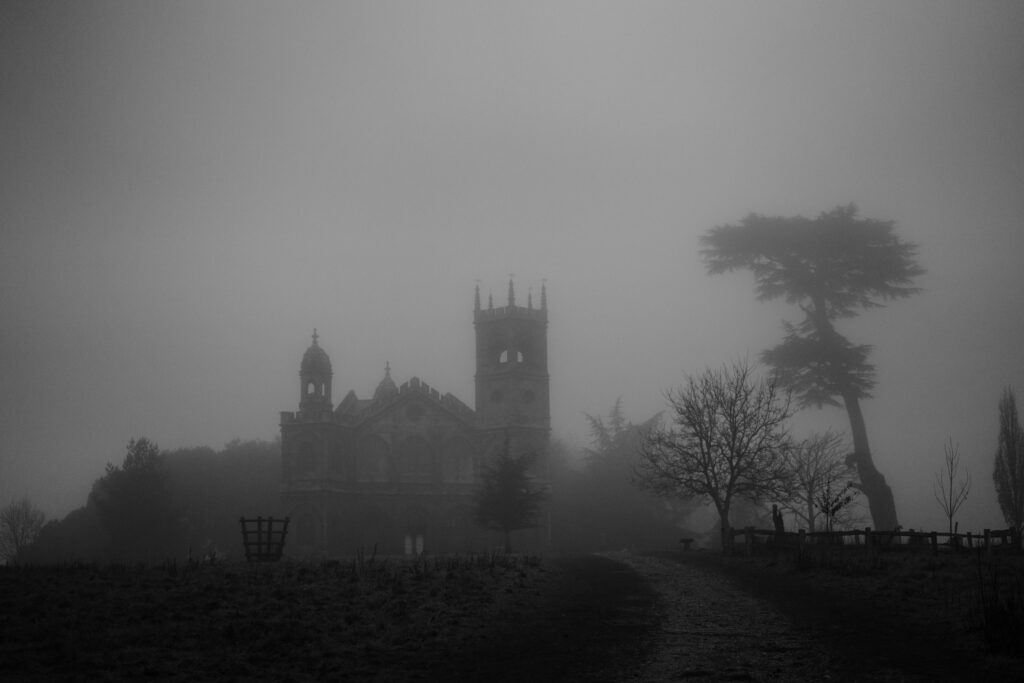
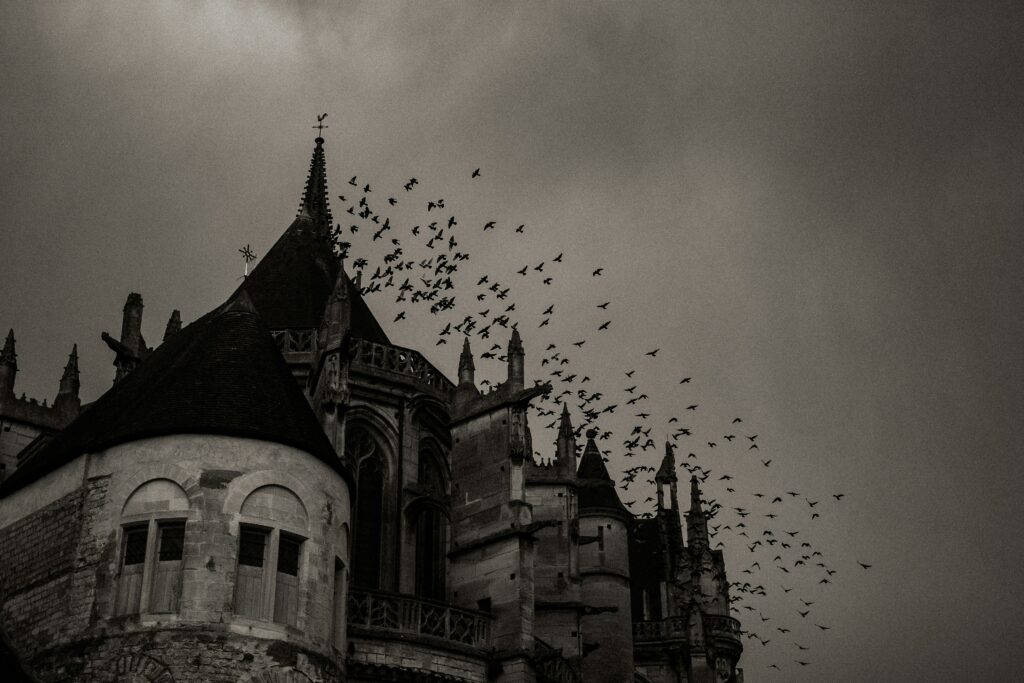
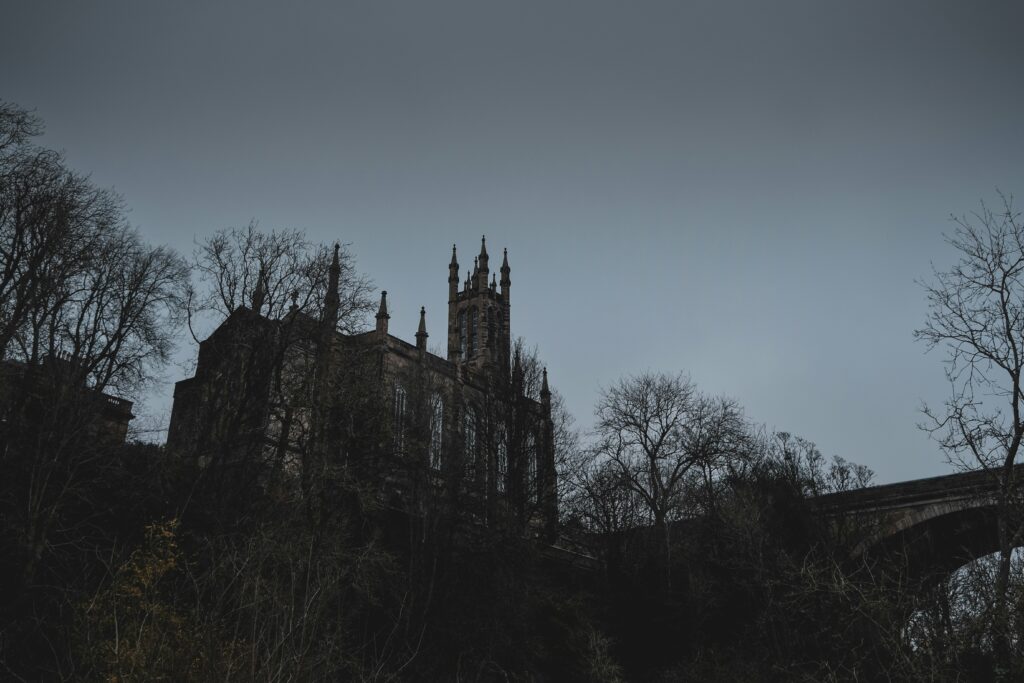
Certain images and settings are heavily associated with Gothic horror, including castles, cloudy nights, and vast, forboding landscapes. There’s nothing wrong with experimenting and pushing boundaries, but it’s good to keep these things in mind.
Since it’s such an old horror subgenre, many of its classic films were done in black and white, giving a classy, traditional aesthetic. Although black and white is no longer the norm, channel the look and feel of a black and white film, and you’re on the right track.
Core traits of Gothic horror:
- Old, isolated settings (castles, manors, ruins).
- Characters haunted by guilt, love, madness, or loss.
- Supernatural or unexplained elements that reflect human fears.
- Emotional intensity: passion, obsession, melancholy.
- Themes of decay, both physical and moral.
Classic influences:
- The Castle of Otranto by Horace Walpole (1764): Widely considered the first Gothic novel.
- Frankenstein by Mary Shelley: Gothic horror with a moral and scientific twist.
- The Haunting of Hill House by Shirley Jackson: Psychological dread within a gothic frame.
If you’re still learning how to write gothic horror, start small. Try writing short stories before tackling complete novels. Focus on one atmosphere, one fear, one haunted place, and build from there.
How to Set Mood in Gothic Horror
Atmosphere is the beating heart of Gothic horror. Without it, your story risks feeling flat or generic. Before you tackle dialogue, world-building, and plotting your big twist, you must master atmosphere.
These tips will help you learn how to set mood in Gothic horror:
1. Use setting as a character
In Gothic horror, the setting often feels alive. The walls groan, portraits seem to watch, and weather mirrors emotion. A decaying mansion might symbolize a decaying mind. A storm might echo internal chaos.
Describe your setting with sensory detail: the smell of damp stone, the flicker of candlelight, the echo of footsteps that may or may not belong to someone else. Sensory details are crucial for pulling the reader in and making them feel what your character feels.
While you want a good mix of sensory details, it’s also important not to overdo it. Every story will be a little different, but a good rule of thumb is not to insert more than one description per sense, per scene.
For example, don’t describe the smell of the car, the ground, the smoke in the air, and the perfume of your companion in the same walk from the vehicle to the building. If all of these things are important to the setting and the reader’s understanding, parcel them out over time.
2. Balance beauty and decay
Gothic horror thrives on contrast: grandeur and ruin, light and shadow, beauty and horror. A dusty ballroom with cracked chandeliers can feel more eerie than a dungeon because it whispers of something once elegant, now forgotten.
You can make this hit even closer to home if the once-fantastic setting elicits memories, emotion, or a sense of familiarity or nostalgia in your character. If they’ve seen or been to the decaying place before it started deteriorating, even better.
3. Control pacing
Mood relies on rhythm. Slow your pacing during key atmospheric moments. Linger on description and silence. A few carefully chosen details are more effective than paragraphs upon paragraphs of description.
In scenes between “action” or your main plot points, take advantage of the slow moment to weave in exposition, character backstory, world-building, lore, etc. It’s easy to info-dump these things, so getting creative with exposition is essential.
Depending on the tone and subject of your story, you can also use these moments to offer some brief levity or comic relief, if appropriate!
4. Use weather and nature effectively
Gothic stories often unfold under gray skies, in storms, or through creeping fog. Let the elements reinforce emotion. Rain isn’t just wet; it isolates. Thunder doesn’t just crash; it punctuates dread.
For inspiration, study the openings of Wuthering Heights or Rebecca. Both establish mood immediately through their surroundings.
Known officially as “pathetic fallacy,” the use of weather to illustrate and/or set the tone of the story is effective because it’s real. While your circumstances might not be bad, a dark, gloomy, cold day still tends to put people in a bad or sad mood.
Alternatively, a bright and sunny day often makes people feel happy and positive. Take advantage of this and use the weather in your story!
Gothic Horror Story Writing Techniques
The best gothic horror stories combine atmosphere with emotional and psychological tension. Here are techniques to strengthen your writing, whether you’re already a master or you’re still learning how to write Gothic horror.
1. The Uncanny and the Unknown
Gothic horror plays in the space between reason and superstition. Present strange occurrences that could be supernatural or could have rational explanations.
Let your readers wonder which is true until the end, or leave it open for interpretation!
2. Symbolism and foreshadowing
Everything in gothic horror carries meaning: the colour of a dress, the shape of a key, the direction of a shadow. Subtle details can hint at themes of loss, guilt, or decay. They can also hint at twists, answers, and secrets later in the story.
3. The Unreliable Narrator
The unreliable narrator is a staple of Gothic fiction. The protagonist’s perceptions may be skewed by madness, fear, or grief. This creates tension and mystery: can readers trust what they’re told? Can they believe what goes on in the character’s mind?
4. The Romantic Tragedy
Love and death often walk hand in hand in gothic horror. Romance is rarely happy; it’s obsessive, forbidden, or doomed. Use this to amplify emotion and stakes.
5. Isolation and Entrapment
Whether physical or emotional, isolation is central. Your characters may be trapped in a castle, a relationship, or their own minds. This sense of confinement fuels dread because it’s a very real fear for many people.
How to Write Gothic Horror Dialogue
Dialogue in gothic horror should sound timeless, but not stilted. It needs rhythm and tension, a mix of old-world formality and emotional truth.
1. Reflect setting and tone
In Gothic stories, people rarely speak plainly. Their words are layered with fear, longing, or guilt. Dialogue often mirrors the atmosphere: slow, deliberate, sometimes poetic.
Example:
Instead of “Don’t go in there,” you might write, “You mustn’t enter that room. Some doors were never meant to open again.” It should teeter on dramatic without going over the edge.
2. Use subtext
In gothic horror, what’s unsaid matters most. A character may discuss the weather but mean something else entirely. Dialogue becomes a form of concealment, a dance around truth.
3. Avoid modern slang
While you don’t have to mimic Victorian prose, contemporary slang can break immersion. Keep speech grounded but slightly elevated, with elegant phrasing or understated dread.
You can add a sense of place and time by researching and using slang that was common and popular during the time your story is set.
4. Let silence speak
Pause between exchanges. In gothic writing, silence, hesitation, and half-finished sentences can reveal fear more powerfully than shouting ever could.
How to Develop Gothic Characters
Characters in gothic horror are rarely simple heroes or villains. They’re driven by inner turmoil, obsession, and secrets. The hero can have a dark past. The villain can have a sympathetic cause. Mastering the art of character development is crucial when learning how to write Gothic horror.
1. The Byronic Hero
This is a key gothic archetype: charismatic, intelligent, but morally ambiguous. Think Mr. Rochester from Jane Eyre or Heathcliff from Wuthering Heights. The audience roots for them, mostly – but they hate themselves just a little for it.
2. The Innocent or the Outsider
Often, the protagonist enters an unfamiliar world: a new governess in a haunted house, or a traveller visiting a strange castle.
Their innocence and ignorance heighten tension. It also makes building suspense and mystery easier since they don’t know the backstory of the place or the people they’re surrounded by.
3. The Doomed Lover
Love in gothic fiction is never safe. It’s passionate, dangerous, and often ends in loss or madness. Many loves are forbidden or unrequited. Many suitors are not suitable at all. And the truly pure at heart rarely get a happily ever after; if they do, perhaps it’s in the afterlife.
Lean into the tragedy and doom. Ramp up the drama in the most poetic way you can.
4. The Haunted Victim
Sometimes literally haunted, sometimes metaphorically. They’re pursued by guilt, grief, or something darker. Gothic horror is layered and complex, with very few characters being truly good and pure. The stories thrive on darkness, even in moments of success or triumph.
When writing Gothic characters, dig deep into their emotions and motivations. Their fears, desires, and regrets should drive the story as much as any ghost or curse.
How to Use Modern Settings in Gothic Horror
While traditional Gothic tales unfold in castles and moors, modern writers are reimagining the subgenre for contemporary audiences. This can create something truly unique and serve as a breath of fresh air for avid fans of Gothic horror – if it’s done right!
Consider these tips when using modern settings in Gothic horror:
1. Urban Gothic
Set your story in decaying cities, abandoned hospitals, or crumbling apartment blocks. The isolation of modern life can replace the isolation of rural estates.
2. Technology as the New Gothic
Emails, surveillance, and artificial intelligence can all echo classic gothic themes, obsession, the double life, and loss of control.
3. The “Haunted Mind”
Psychological interpretations of Gothic horror fit perfectly in modern times. A haunted house may represent trauma, and ghosts may symbolize guilt.
Look to works like Mexican Gothic by Silvia Moreno-Garcia or Crimson Peak by Guillermo del Toro, both of which honour the Gothic tradition while keeping it fresh.
How to End a Gothic Horror Story
Endings in Gothic horror often strike a balance between mystery and melancholy. They rarely resolve everything neatly. Instead, they leave readers with lingering unease, bittersweet understanding, or pure existential dread.
Tips for gothic endings:
- Don’t over-explain. The unknown is part of the power.
- Offer emotional resolution even if the supernatural remains uncertain.
- End on an image, not just a twist; something that lingers.
Example: the echo of footsteps long after the house is empty, or a letter discovered years later that changes everything.
Gothic Horror Writing Tips for Consistency
- Read widely: study both classic and modern Gothic writers.
- Keep a notebook of sensory details; how fog looks, how decay smells.
- Build tension slowly; gothic horror rewards patience.
- Remember that fear and beauty can coexist.
Recommended Reading:
- Rebecca by Daphne du Maurier
- The Haunting of Hill House by Shirley Jackson
- Mexican Gothic by Silvia Moreno-Garcia
- Interview with the Vampire by Anne Rice
Final Thoughts
Learning how to write Gothic horror means embracing contradiction: beauty and decay, fear and longing, the supernatural and the psychological. This is a genre that thrives on atmosphere and emotion and on the tension between light and shadow.
Whether you’re beginning or refining your craft, remember that Gothic horror is about more than ghosts and castles. It’s about what lingers in the dark corners of the human heart as much as the closet. So light your candles, open your notebook, and start writing your own descent into the beautifully haunted world of Gothic horror.


2 Comments
Michel · October 30, 2025 at 6:39 pm
You are quite right. I never thought about it but writing a gothic horror does contain elements of romanticism and terror. You just need to learn how to get the mix just right.
I have always been tempted to try writing a novel, but you are right, if wanting to try this route, try your hand at short stories first before attempting a big novel. However I have never thought about writing a novel in this genre before, and think it could be quite intriguing to try.
You have given some wonderful ideas to get started, and setting the scene is the start of it all. Is it better to set the scene first, before choosing your characters?
Steph · October 30, 2025 at 6:54 pm
Hi Michel, that’s a great question! I think the answer is that it really depends. I think it depends on whether or not you have a specific idea. If a particular character has sprung into your imagination, or you’ve been inspired by a particular person or type of character, then that’s where you should start.
However, if you want to write a story but don’t have a specific idea, I think starting with a setting is a good approach. It sets you up to create plots and characters that fit the time, place, feeling, and vibe that you want.
Good luck and happy writing!