Some horror films are so unsettling that they feel almost too real. In many cases, that is because parts of them are real. From abandoned asylums to haunted hotels to eerie ghost towns, numerous films draw inspiration from actual locations with dark histories. Below, we will explore 7 real places that inspired horror movies.
We’ll reveal the true stories behind them, and explain what makes these settings so unforgettable. These real-world locations show how deeply rooted horror can be in genuine human fear, folklore, and strange events that defy explanation.
Whether you are a horror fan or a writer looking for inspiration, these places demonstrate how powerful real settings can be in shaping horror stories.
Real Places That Inspired Horror Movies
1. The Stanley Hotel
Inspiration for: The Shining (1980)
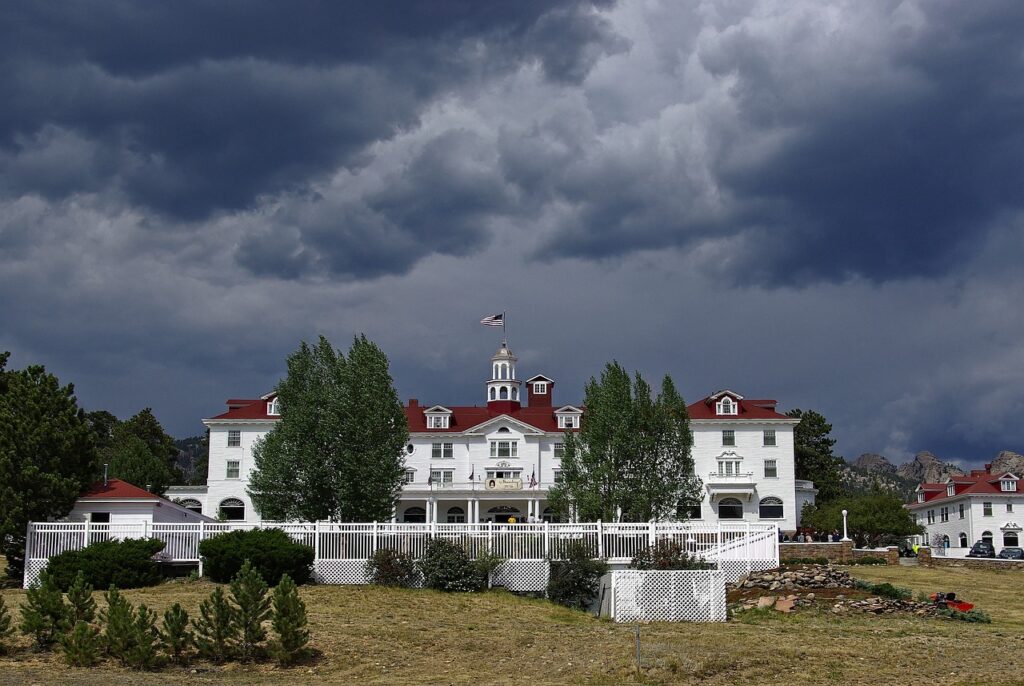
We can’t talk about real places that inspired horror movies without talking about one of the most famous haunted hotels in the world. The Stanley Hotel in Estes Park, Colorado is best known for inspiring Stephen King’s The Shining.
During a stay there in 1974, King wandered its long corridors, empty ballroom, and eerily quiet halls. The isolation and atmosphere left such an impression that it became the seed of one of the most iconic horror stories ever written.
The true story behind the film:
Guests and staff have reported piano music with no pianist, children laughing in empty hallways, and sudden cold spots. The hotel embraces its spooky reputation with nightly tours and themed events.
Why it works in horror:
Old hotels already carry a sense of memory. Add sweeping mountain isolation and unexplained activity, and you get a perfect breeding ground for insanity and fear.
2. Centralia, Pennsylvania
Inspiration for: Silent Hill (2006)
Before 1962, Centralia, Pennsylvania, was home to about 1400 residents who lived normal small-town lives.
Unfortunately, what should have been a simple trash-burning fire went rogue on one fatal day, with the spark soon spreading to a nearby coal seam where it quickly spiralled out of control. The town managed to co-exist with the mine fire for a little while, but the environment soon became untenable.
In 1984, the government finally stepped in and relocated the remaining residents. While the buildings were destroyed, other infrastructure, like roads and sidewalks, remained intact. This is what gives it such an eerie, ghost-like look and feel.
The now-abandoned coal-mining town of Centralia still smoulders underground, the fire never succumbing. The result is a deserted landscape with cracked roads, toxic smoke vents, and empty lots overtaken by nature.
The true story behind the film:
While the Silent Hill movie is fictional, Centralia’s real-life imagery heavily influenced its foggy streets, ghost-town atmosphere, and apocalyptic-like emptiness.
Why it works in horror:
A real ghost town, slowly disappearing as the earth itself burns beneath it, is already a ready-made horror setting. The isolation, smoke, and unnatural silence create instant dread. The smoke itself plays double duty: it’s physically hazardous to the body, and its density can conceal threats and danger until it’s too late.
3. The LaLaurie Mansion
Inspiration for: Various films and series, including American Horror Story
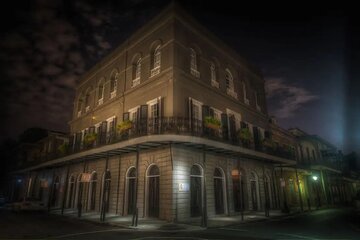
Located in New Orleans, the LaLaurie Mansion is one of the city’s most notorious historic homes and another of the most famous real places that inspired horror movies and series. In the 1800s, Madame Delphine LaLaurie was revealed to have committed horrific acts within its walls, leading to a long legacy of hauntings and dark folklore.
Madame Delphine began as Marie Delphine McCarthy and was married three times, the third being Dr. Louis Lalaurie. They met in 1836 when her daughter became his patient. The pair quickly had a child and married, though their love story was not a classic one.
They reportedly fought frequently and separated often. Although they reunited many times, Madame Delphine eventually requested an official separation through the courts. Once on her own, she purchased the lot that would soon house the now-infamous LaLaurie Mansion.
Many stories and rumours swirled about Madame Delphine and her mansion, mainly regarding the abuse and mistreatment of her several owned slaves, of which one reportedly fell from the roof while trying to avoid punishment.
It was ultimately a house fire that revealed and confirmed the secrets. When investigating the fire, police and bystanders found several slaves chained up inside the house, with apparent signs of physical mistreatment. As word spread, neighbours became enraged, and it’s said that about 4000 people arrived to storm and destroy the mansion. Madame Delphine fled and lived the rest of her life in Paris.
While not much was left after the townspeople were through with the place, it’s reportedly been haunted ever since. Tourists still constantly flock to check it out.
The true story behind the film inspirations:
Screams, apparitions, cold spots, and shadow figures have all been reported. Many locals consider it one of the most haunted locations in the United States.
Why it works in horror:
New Orleans is rich in ghost stories, and the mansion’s history blends real tragedy with supernatural lore, making it an enduring horror landmark.
4. The Monte Cristo Homestead
Inspiration for: The found footage movie Muirhouse and other various haunted house films
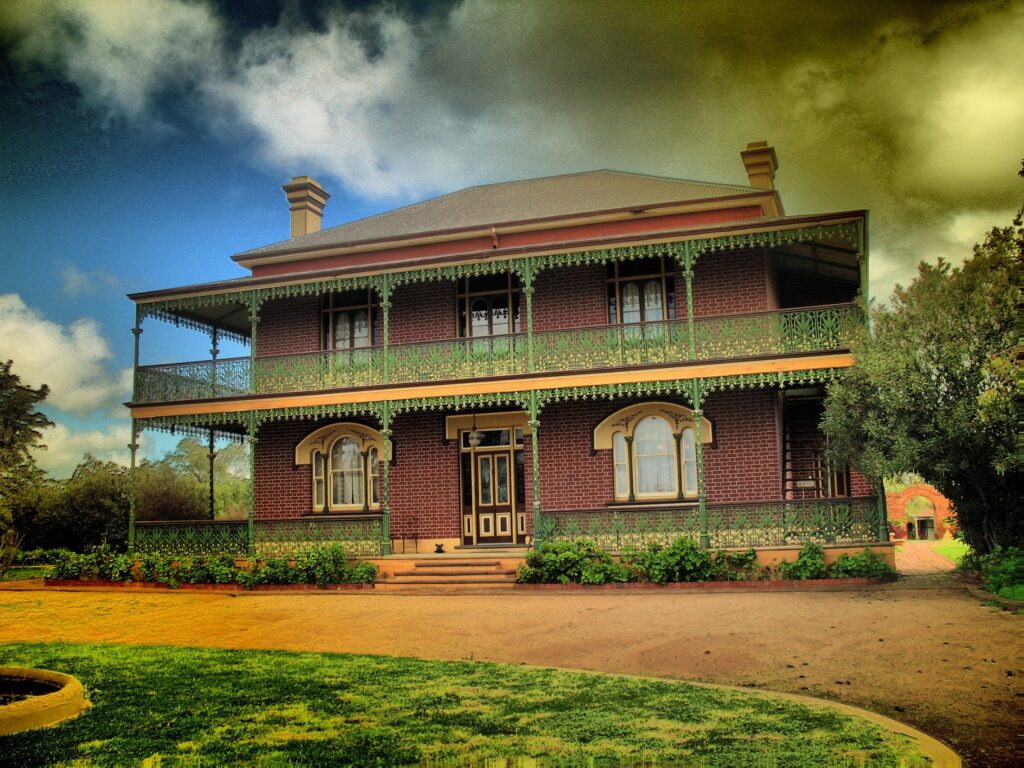
Known as Australia’s most haunted home, this Victorian mansion in New South Wales has inspired countless horror narratives thanks to its tragic and unsettling past. Built in 1885, it has been connected to several mysterious deaths.
The home was initially commissioned by Christopher Crawley, who lived there with his wife and many children. Though later purchased by another family and turned into a museum, the Crawleys are said to remain on the premises, even after death.
Christopher Crawley is said to haunt the room in which he died, though his spirit is kind and gentle. His wife, Elizabeth, on the other hand, still tries to rule the house, judging anyone who dares to enter. Once Christopher died, Elizabeth couldn’t cope, only leaving the house twice in her last 23 years of life. It’s no wonder she still can’t move on.
To this day, it’s regarded as one of Australia’s most haunted houses.
The true story behind the film inspirations:
Visitors have reported full-body apparitions, phantom footsteps, flickering lights, and sudden chills. It is a staple among haunted house enthusiasts.
Why it works in horror:
A remote mansion, family tragedy, and a pattern of unexplained phenomena provide all the essential ingredients for ghost-centric horror.
5. The Aokigahara Forest
Inspiration for: The Forest (2016), among others.
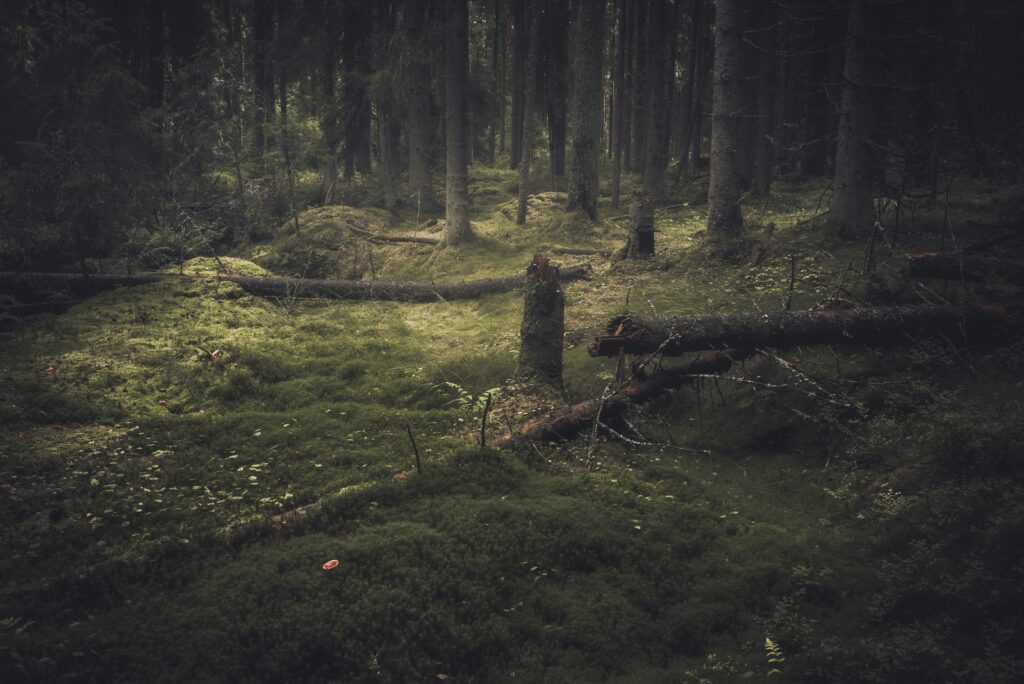
Aokigahara, also known as the Sea of Trees or the “suicide forest,” lies at the base of Mount Fuji and has gained international attention for its association with legends, folklore, and tragic events. Around 864, Mount Fuji erupted for 6 months, burying villages and leaving behind a ton of hardened lava.
In the hundreds of years that followed, a rough, tangled forest grew over the area, becoming the infamous suicide forest featured in many films, books, stories, and folklore.
According to the local government, more than 100 suicides occurred in the forest between 2013 and 2015 alone. Many of the victims were found to be tourists and foreigners.
The government has stopped sharing statistics on the forest to deter people from wanting to visit and check it out for themselves. There have been many attempts made to explain this tragic reality, with theories ranging from abnormalities in the earth and energy to supernatural forces at work. Whatever the truth may be, it sets a perfectly dark and haunting stage for a true horror story.
Not only is the suicide forest among the many real places that inspired horror movies, but a plethora of influencers, Youtubers, and other content creators have made videos in and around the forest. Some are more chilling than others, but these real life experiences rarely go as planned.
The true story behind the film:
The forest’s thick trees create a natural sound barrier, making it eerily quiet. Compasses often malfunction due to the magnetic iron in the soil.
Why it works in horror:
The quiet. The density. The disconnection from the outside world. Though there is a logical real-life explanation, the malfunctioning compases make a great plot point and anchor for the paranormal. Aokigahara is a real location where paths vanish, sound disappears, and the world feels altered.
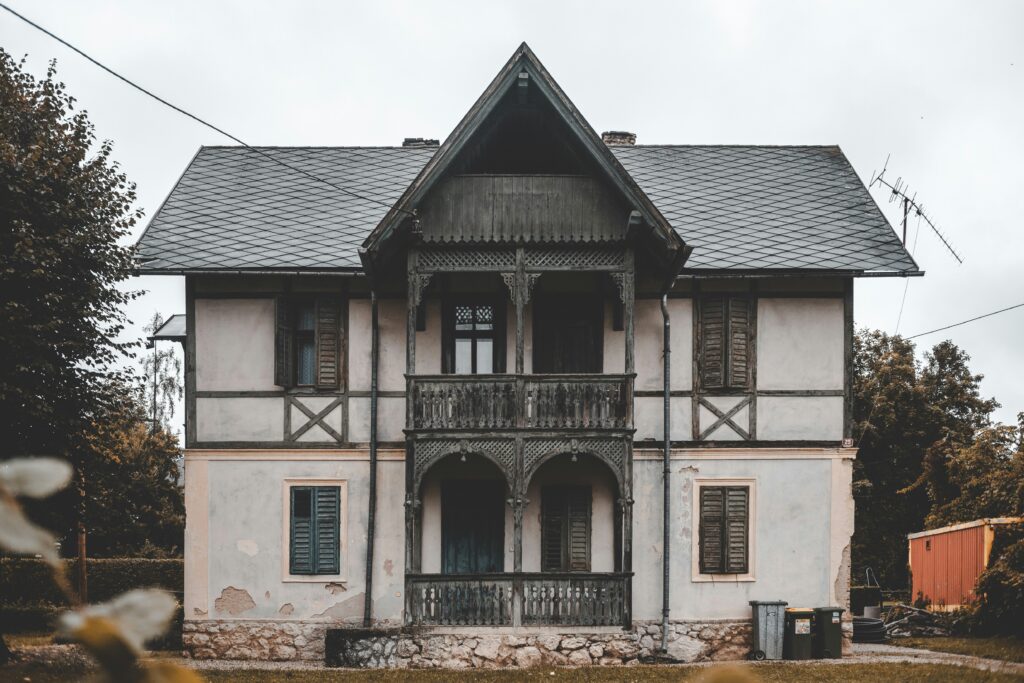
6. The Haunted Villisca Axe Murder House
Inspiration for: The Axe Murders of Villisca (2016)
Located in Iowa, this small white farmhouse was the site of a gruesome unsolved crime in 1912. On the particular night in question, Josiah, Sarah, their four children, and two of their daughters’ friends were sleeping in the house.
At some point throughout the night, an unknown person entered the home and brutally murdered every occupant. Although this alone was crazy enough, there were many strange elements: the killer used an axe, but only the blunt end. He continued bludgeoning the parents long after they were dead.
Once finished, he covered every mirror in the home – a common practice for wakes and funerals at the time. Lastly, he covered each victim with a piece of cloth or clothing and closed all the blinds. This left investigators baffled – did he feel remorse? Was he trying to cover evidence?
To this day, the mystery remains unsolved, though many modern-day sleuths have attempted to put the pieces together. Due to the brutal and bizarre nature of the crime, the house has become a notorious hotspot for controversy, discussion, and, of course, paranormal experiences.
The true story behind the film:
Visitors claim to hear footsteps, children’s voices, and objects moving on their own. Some investigators refuse to return because of the intense activity.
Why it works in horror:
The horrors here are rooted in real, unsolved violence. The emotional weight of a traumatic event, combined with reports of hauntings, creates an atmosphere ripe for horror storytelling.
7. The Island of the Dolls
Inspiration for: The Curse of La Llorona (indirect), many documentaries
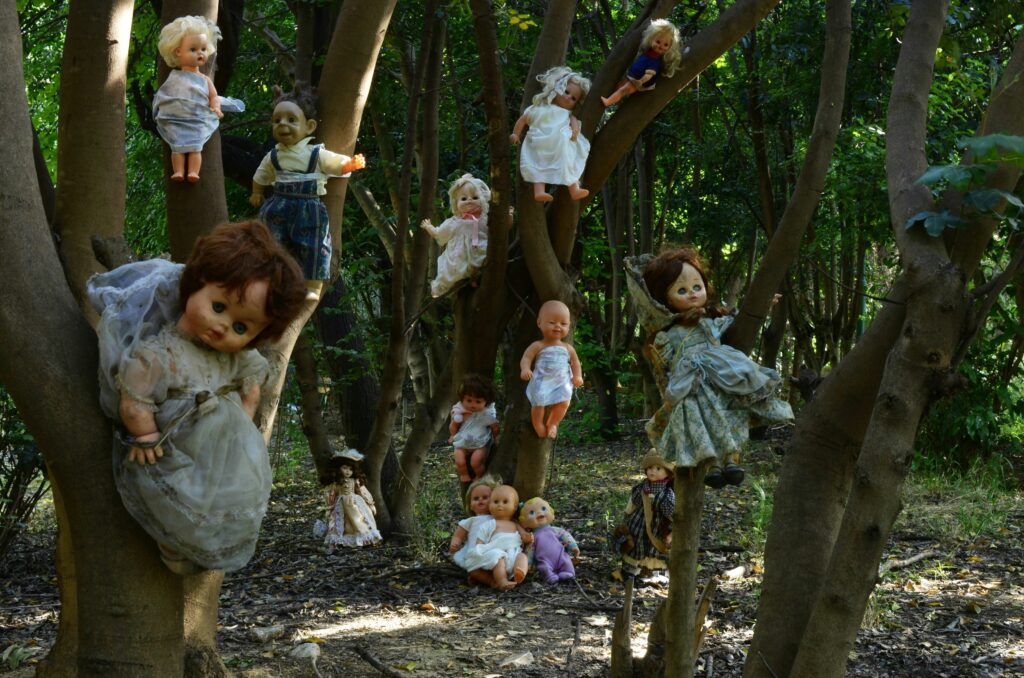
Located in the canals of Xochimilco, Mexico City, this disturbing site is covered with hundreds of weathered, decaying dolls hanging from trees and structures. This alone is creepy as hell, but the island has a dark and mysterious history to go with the dolls.
The story centers on a man named Don Julian Santana Berrera. One day, Don randomly decided to leave his wife and family and isolate himself on this island. No one truly knew why, though they suspected he was not of sound mind.
Once alone on the island, Don soon discovered the body of a young girl. Soon after, he found a doll washed up on the shore. Allegedly, he hung the doll on a tree in an attempt to appease the spirit of the unknown girl he found dead.
This soon became an obsession; one doll was not enough. He continued to scavenge dolls from the canal, the dumpsters, the trash, anywhere he could. He would hang them on the island’s many trees, no matter their condition – some were headless, missing limbs, etc. This continued for 50 years, and the island remains, in all its dirty, ragged doll-creepiness.
Don was found washed up in the canal himself in 2001. His story remains a mystery. Many question if the girl he supposedly found ever even existed, or if he either made it up or hallucinated her. Either way, the insanely bizarre and creepy island and its story have inspired many stories, investigations, and theories.
The true story behind the film inspirations:
The location has become a nightmarish yet strangely captivating landmark since the deaths of the doll’s caretaker.
Why it works in horror:
Dolls already sit deep in the uncanny valley. Combine them with real folklore, decay, and isolation, and you get a setting horror fans will never forget. Although creepy dolls are a common thread in the horror world, I believe they’ll never go out of style – dolls will never not be creepy!
How Horror Movies Transform Real Places into Iconic Fiction
Many of the real places that inspired horror movies become even creepier when adapted for film. Directors often exaggerate features, emphasize eerie elements, or use lighting and colour to enhance atmosphere. They often take the real lore and deepend, make it scarier, or give it a more unsettling visual.
A good example is in The Conjuring and Annabelle movies, the doll is large, creepy, and forboding. This works well for the movies. However, the real-life Annabelle is a classic Raggedy-Ann doll – nothing scary about it, at first glance, anyway.
Common location transformations include:
- exaggerating the isolation
- focusing on empty hallways, abandoned beds, or rusting equipment
- enhancing fog, shadows, or darkness
- adding folklore elements for atmosphere
- integrating real history with fictional embellishments
The combination of reality and imagination is what makes these films so memorable.
Why Real Places Make Horror Movies More Powerful
Real places influence horror because:
- they carry emotional and historical weight
- they remind us that horror is not always purely supernatural
- they create grounded atmospheres that feel believable
- they let viewers imagine themselves inside the setting
- they tap into collective fears like hospitals, forests, isolation, and the unknown
When a filmmaker uses a real location, the story becomes more immersive. Fear becomes easier to believe when it grows from something that actually exists.
Conclusion
Exploring these real places that inspired horror movies shows just how deeply reality and storytelling are intertwined. From haunted hotels to abandoned towns and eerie forests, these locations remind us that the world is full of unsettling histories and mysterious energies.
Whether you love horror films or simply enjoy learning about creepy real life places, these destinations prove that truth can be just as frightening as fiction.
Next time you watch a horror movie, remember that its most terrifying scenes may have started with a real location that still exists today.


0 Comments