If you want to learn how to write cosmic horror, you are stepping into a subgenre rooted in awe, dread, insignificance, and the uncomfortable truth that the universe does not care if we exist. Cosmic horror is not merely about tentacled creatures or forbidden texts – though these things are fun to include!
It is a worldview, a philosophy, and a slow unravelling of human certainty. To write cosmic horror well, you must create a story where the true terror lies not in monsters, but in the collapse of everything we believe about ourselves and the world in which we exist.
This guide will walk you through all the essential elements of cosmic horror, including atmosphere, characters, themes, dialogue, worldbuilding, mythology, and endings.
Whether you are new to the subgenre or ready to refine your skills, this post will teach you how to write cosmic horror that captures the feeling of staring into the abyss and watching it stare back.
What is Cosmic Horror?
Cosmic horror originated with writers such as H. P. Lovecraft, Arthur Machen, and Algernon Blackwood, but modern authors have expanded and refined the subgenre. At its core, cosmic horror suggests several things as its baseline:
- The universe is vast, ancient, and incomprehensible.
- Humanity is powerless and irrelevant.
- Knowledge itself can be dangerous.
- Reality is fragile and can fracture at any moment.
- Fear comes from what cannot be fully understood.
Before you can learn how to write cosmic horror, you must embrace this worldview. The tension arises not from gore or action, but from dread, insignificance, and the realization that some truths should never be found. It’s more than just a horror subgenre; you must immerse yourself in the mindset, put yourself in that place of wonder, to write the most effective cosmic horror stories.
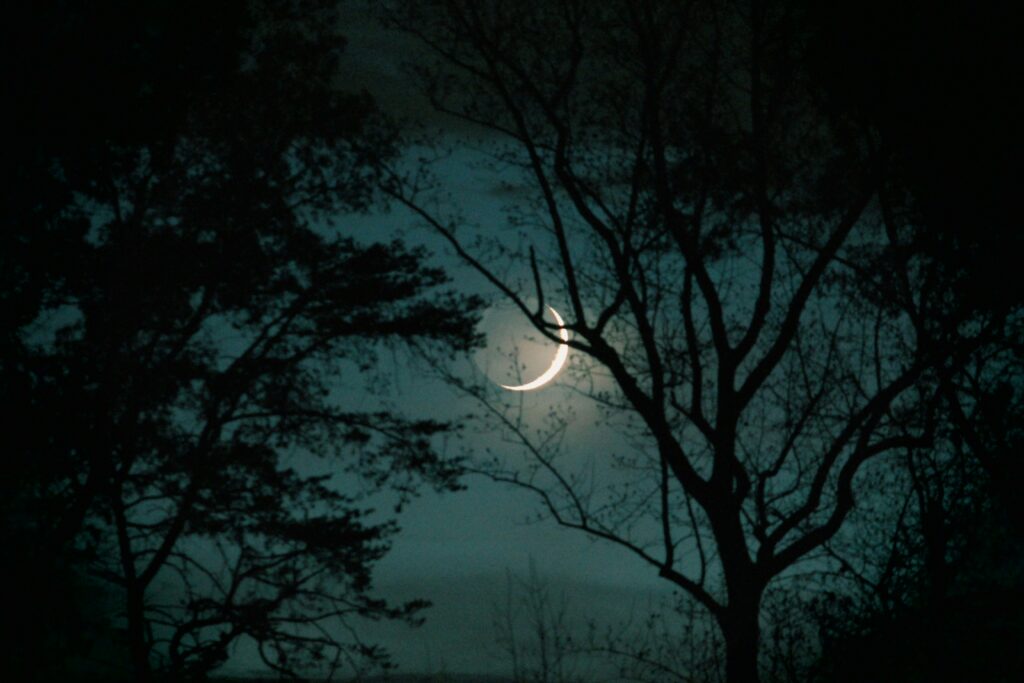
The Best Cosmic Horror Writing Tips
Below are the strongest ways to elevate your cosmic horror and make your story feel genuinely unsettling.
1. Focus on Insignificance Rather Than Survival
In many horror genres, characters fight to survive. In cosmic horror, survival does not always matter. The terror comes from realizing that the universe is too big for human effort to matter. The protagonists can still attempt to resist, but the story’s emotional power comes from their limited understanding and inability to control the situation.
Tip: Let characters try to make sense of what is happening, then show that the truth is larger than their comprehension.
2. Limit What the Reader Knows
Cosmic horror thrives on ambiguity. Never fully explain the creature, entity, or phenomenon. Suggest. Hint. Reveal slivers. Then stop. The unknown is your strongest tool.
3. Use Atmospheric and Sensory Details
Cosmic horror is slow, creeping dread. Build it through texture, sound, temperature, light, and silence. Make readers feel the wrongness before they understand it.
4. Center the Horror on Knowledge
Forbidden knowledge, ancient discoveries, and impossible truths are core themes. The more a character learns, the worse things become. Their curiosity is often their undoing.
5. Ground the Story in Human Emotion
Even if the universe is indifferent, your characters are not. Powerful cosmic horror begins with relatable emotions: grief, obsession, loneliness, ambition, or guilt.
Writing Cosmic Horror for Beginners
If you are new to the subgenre, here is the simplest way to start.
Step 1: Choose a Human Emotion
Pick what your character struggles with: grief, regret, obsession, guilt, or a desire for meaning. Cosmic horror sinks deeper when the external threat reflects internal struggle.
Step 2: Create an Ordinary Setting
Cosmic horror becomes stronger when incredible things happen in familiar, grounded places.
Examples:
- A lighthouse on a quiet coast
- A university research lab
- A small-town library
- A remote cabin or outpost
- A fishing boat or coastal village
Ordinary locations create contrast, which intensifies the horror.
Step 3: Introduce Something That Should Not Exist
This does not need to be a monster. It can be:
- A strange cosmic signal
- An artifact that predates humanity
- A person who knows things they should not
- A sound or light that defies physics
- A dream shared by multiple people
Let the disturbance be subtle at first.
Step 4: Escalate Understanding, Not Action
In cosmic horror, tension increases because characters learn more, not because they fight more. As they uncover knowledge, the world becomes stranger, and their sense of reality begins to fracture.
Step 5: End with Awe, Terror, or Uncertainty
Cosmic horror endings do not need a triumphant moment but should leave readers with a deep, lingering unease.

How to Incorporate Cosmic Elements in Writing
Here are the cosmic elements that define the genre, along with how to use them effectively.
1. The Vastness of the Universe
Describe scale that is impossible to imagine. A creature older than planets. A space between atoms that contains life. A timeline where human civilization is a flicker.
2. Indifferent Entities
Cosmic beings do not hate humanity. They simply do not notice us. This is far more frightening than malice.
3. Fragile Reality
Characters might see visions, hear impossible sounds, or witness physics bending. Reality itself can warp under cosmic influence.
4. Ancient Knowledge
Old texts, carvings, signals, artifacts, or rituals can hint at civilizations older than the stars.
5. Dreams and Madness
Dreams can reveal impossible truths or foreshadow cosmic influence. Madness is not the goal but a symptom of seeing too much.
Should I Use Real Mythology in Cosmic Horror?
Writers often ask whether real-world mythologies should be part of cosmic horror. The answer is: yes, but with care. If you make the story or its elements too familiar, you’ll lose the reader’s interest. If you’re using a known myth or familiar characters, you have to put a fresh twist on it, or change something up.
Many myths, legends, and fables have a “fabase,” if you will: a group of people who love it. These people will happily read your story based on their favourite characters, but only if it’s interesting.
When It Works
- You draw inspiration from existing myths but create something new.
- You use mythology as a starting point, not the whole story.
- You explore forgotten or lesser-known myths with cosmic potential.
When It Does Not
- You rely too heavily on established gods or creatures.
- You use mythology without adding your own strange, cosmic twist.
- You make the mythology too understandable or structured.
Tip: If you use real mythology, distort it. Expand it. Add impossible elements. Let your myth feel older than the version humanity remembers.
How to Write Cosmic Horror Dialogue
Dialogue in cosmic horror must reflect emotion, confusion, obsession, or unravelling sanity. It should also avoid over-explaining. Writing dialogue in cosmic horror isn’t all that different from writing regular dialogue. Still, you can use it to help convey the things most important to cosmic horror: terror, confusion, fear, etc.
You can also use it as an exposition tool to feed your readers hints and clues about what may ultimately be going on, without going into a full-on info-dump. Consider the following tips when trying to determine how to write cosmic horror dialogue:
1. Keep Dialogue Sparse During Scary Moments
Characters should struggle to understand or describe what they see. Speech becomes fragmented when they face the incomprehensible.
2. Let Dialogue Reveal Obsession or Fear
Characters might speak in circles, contradict themselves, or fixate on strange details. Their mental state should shift as the story deepens.
3. Use Silence as a Form of Communication
Silence is powerful. It can mean shock, denial, or an inability to describe cosmic terror. A lack of dialogue where it would usually happen can be just as effective as a piece of well-written dialogue.
4. Avoid Exposition Dumps
Characters cannot explain what they do not understand. Let their words reflect confusion rather than clarity. You can use their confusion or misunderstanding to further confuse or misdirect the reader – at least temporarily.
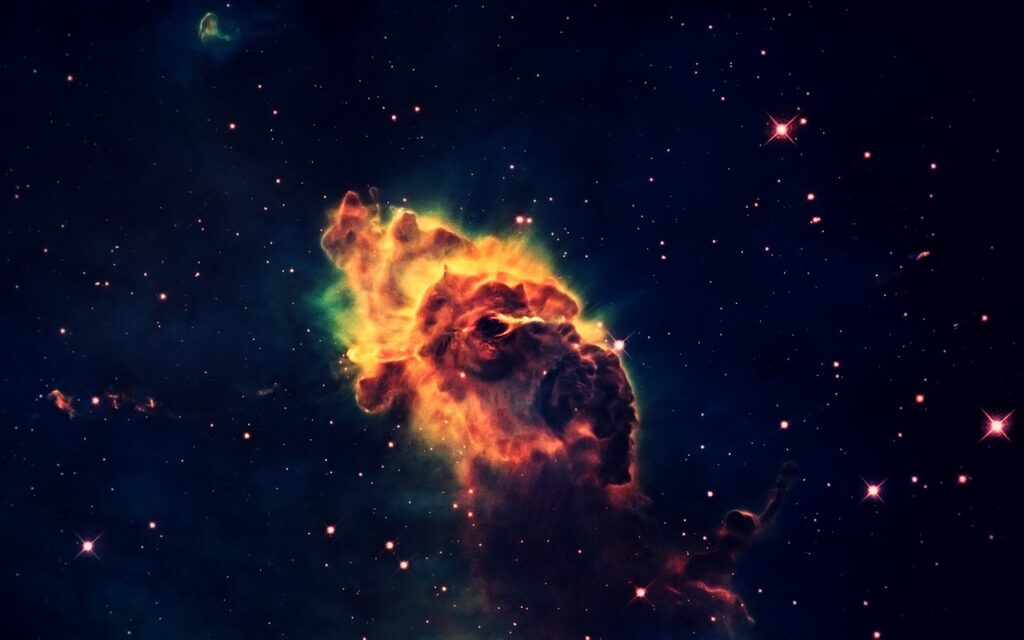
How to Write Cosmic Horror Endings
Your ending is one of the most important parts of learning how to write cosmic horror. Cosmic horror rarely offers victory. Instead, it offers an emotional or philosophical resolution, albeit with lingering uncertainty.
Cosmic Horror Ending Types That Work Well
1. The Discovery Ending
The character uncovers the truth, but it costs them everything. They may live, but their perception of the universe is forever changed, or they’ve lost their world as they know it.
2. The Transformation Ending
The character becomes part of the cosmic phenomenon or, in some subtle way, abandons their humanity. Perhaps they’re manipulated into joining the alien army, or maybe they’re captured and morphed into a brand-new creature entirely; that sort of thing.
3. The Containment Ending
The horror is temporarily contained, but the threat remains. The universe has not been saved, only delayed. This is the perfect ending if you love to frustrate readers with a cliffhanger, and/or you would like to leave room for a sequel!
4. The Ignorance Ending
The character forgets what they learned or chooses not to pursue the truth. The reader, however, knows the dread remains. Perhaps they have their memory erased, or they choose ignorance.
Tip: The final image should stay with the reader. A sound. A light. A symbol. A memory. Something that hints at the cosmic truth without defining it. Whatever type of ending you choose, drive it home and use it to leave one last gut-punch.
Extra Tips for Mastering Cosmic Horror
- Study cosmic horror books and notice how little they explain.
- Watch cosmic horror movies for visual inspiration on atmosphere and scale.
- Use second-person or fragmented narration if appropriate. This can be challenging, but when used the right way, it is extremely effective.
- Ground the cosmic threat in human emotion.
- Let curiosity drive the plot until discovery destroys the characters’ worldview.
Great Examples of Cosmic Horror
Books:
- The Ballad of Black Tom by Victor LaValle
- Annihilation by Jeff VanderMeer
- A Lush and Seething Hell by John Hornor Jacobs
- The Fisherman by John Langan
Movies:
Each of these works presents a different angle on cosmic horror philosophy and can help you refine your own approach. Reading and watching existing cosmic horror examples can help you nail your own story, and it’s fun!
| Story Element | Purpose | Tips for Writers |
|---|---|---|
| The Ordinary World | Creates a baseline of normal life so cosmic intrusion feels overwhelming. | Choose everyday, relatable environments to increase contrast and impact. |
| The Disturbance | Signals subtle cracks in reality, hinting that something vast is awakening. | Begin with strange sensory experiences or impossible scientific data. |
| The Forbidden Knowledge | Represents information that humanity was not meant to uncover. | Use ancient texts, unknown artifacts, or unnatural signals that resist explanation. |
| The Cosmic Entity or Force | Embodies the incomprehensible, ancient vastness that makes humanity irrelevant. | Keep it mysterious. Describe effects, not anatomy. Let readers imagine the rest. |
| Reality Fracturing | Shows the universe bending in ways the human brain is not built to comprehend. | Experiment with nonlinear time, impossible geometry, and distorted perception. |
| The Emotional Breaking Point | Marks the climax where human identity collapses in the face of cosmic truth. | Let the climax be psychological or existential rather than action focused. |
| The Aftermath or Echo | Leaves lingering dread by showing that the cosmic truth remains untouched. | End with a chilling image or suggestion that the story is only one small piece of something vast. |
Conclusion
Learning how to write cosmic horror means embracing the unknown and letting your story explore truths too vast for human understanding. The most powerful cosmic horror stories create a sense of awe and fear that lingers long after the final sentence.
When you focus on atmosphere, emotion, forbidden knowledge, and the insignificance of humanity, your cosmic horror will feel authentic, unsettling, and unforgettable.
Cosmic horror is not about monsters. It is about what lies beyond comprehension. And that is where your story truly begins.


0 Comments